The samples in my hallway (and the small system that should have made them sell).
- Alana Lee
- May 5
- 4 min read

There's a stack of flooring samples in my hallway. They've been there for three months.
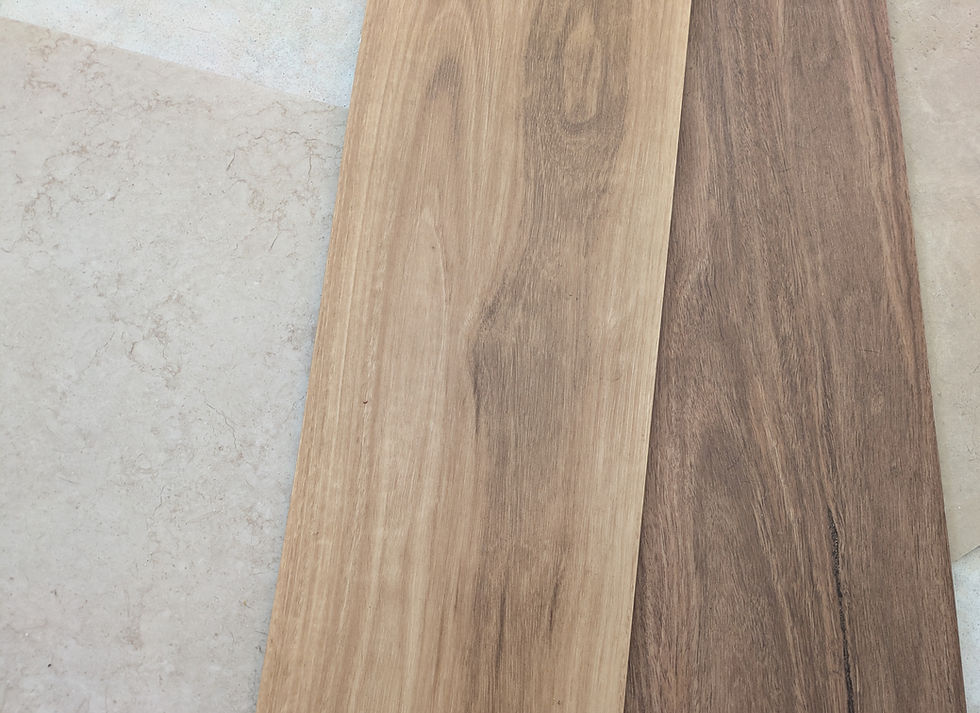
They were lent to me by a very nice sales associate at a flooring business in town, who took my name, my phone number, and my email address before sending me off to live with them for a week or so and see which colour would work best in my new kitchen. That was a quarter of a year ago. I have not heard a single thing from him, or from anyone else at that business, since.
I keep meaning to drop them back. I also keep meaning to buy the flooring. Both keep not happening, mostly because I'm procrastinating and no one has nudged me.
This is not a story about a slack salesperson. He was lovely and did his job well. It's a story about the very small piece of process that's missing in the gap between him doing his job and the next thing that should have happened, and the surprisingly simple way it could be fixed.
What's actually going wrong
From the customer end, my experience is simply that nothing happened after I walked out the door. From the business end, what's almost certainly happening is this: the sales associate has a notebook, or a row in a spreadsheet, or a name jotted somewhere, and his day is full of new walk-ins, phone calls, ordering, and being helpful to the next person at the counter. The follow-up sits in a mental list that quietly grows.
There's no 'bad work' and there's no laziness. There's just no defined way for that follow-up to happen, and so it doesn't. In LEAN terms, this is one of the costlier kinds of waste, because it's invisible, no one in the business sees it happening. The shop still runs. The phones still ring. But the leads die in silence, and the samples do not come back.
What we could try
If I was sitting down with that business owner over a coffee, this is roughly what I'd float. The nice thing about a problem like this one is that it's neither expensive nor complicated to improve, it's just three small bits.
The first bit is a sample-and-lead board. Something light (Monday or Notion would both do the job) where every customer who walks out the door with samples becomes a card, with the date and a few details on it. That gives the owner a single visual of every open lead in the business. Standard LEAN visual management, just at the front of house instead of on a factory floor.
The second bit is a twenty-second intake form. JotForm or a Google Form would do this. The staff member fills it in as the samples go out the door. They just change from notebook and pen to a digital version. Name, contact details, room they are going to go in, colours, day they left. The form feeds the board. The associate doesn't have to remember anything, and the owner doesn't have to chase staff at the end of the week to find out where all the samples went.
The third bit is a follow-up rhythm that runs without anyone touching it. A Zapier automation pushes the customer's details from the form into Flodesk, which sends a friendly email at day three ("hope the colours are working in the kitchen, any questions?"), an offer to swap some colours at day seven, and a gentle "there is actually a sale on that brand that ends this week" at day fourteen. Written once. Sent automatically. None of it making the customer feel chased, all of it keeping the conversation alive long enough for them to either buy or politely return the samples.
A fellow LEAN person reading this will recognise what's quietly going on. We're standardising the work, removing the rework that comes from people trying to remember from memory, building a small pull cadence so the customer drives the next step rather than the staff member, and putting in a bit of poka-yoke so the follow-up is impossible to be missed.

What it actually takes to set up
A few days. Subscription fees for the services chosen. The employee doesn't have to learn anything new, he fills in the form a different way, that's it. The customer doesn't notice anything except that they hear from the business in a way that feels warm rather than salesy. And the owner gets, for the first time, a clear visual of how many open leads are sitting in the business at any given moment.
The cost of not doing it isn't dramatic, that's largely why no one fixes it. It's a quiet, ongoing leak: samples that get written off, sales that don't quite happen, customers who never quite come back.
The bit where I get a little bit serious
People sometimes hear the word "system" and picture something corporate, expensive, or so unwieldy that it needs a six-month project to set up. The honest version, in most of the regional businesses I work with, is that the most useful systems are small. A board. A form. A handful of automated emails. An hour of standard work written down so the next person who joins doesn't have to figure it out from scratch.
That's the kind of thing that lets a business stop depending on the right person being at the right desk on the right day, without losing any of the warmth that made customers walk in there in the first place.
It's also how you make sure that, eventually, the samples come home.
If you are keen to set up some of these ideas in your business, but would prefer not to DIY, get in touch.


Comments